
by Dan Roscoe, President of Renewall
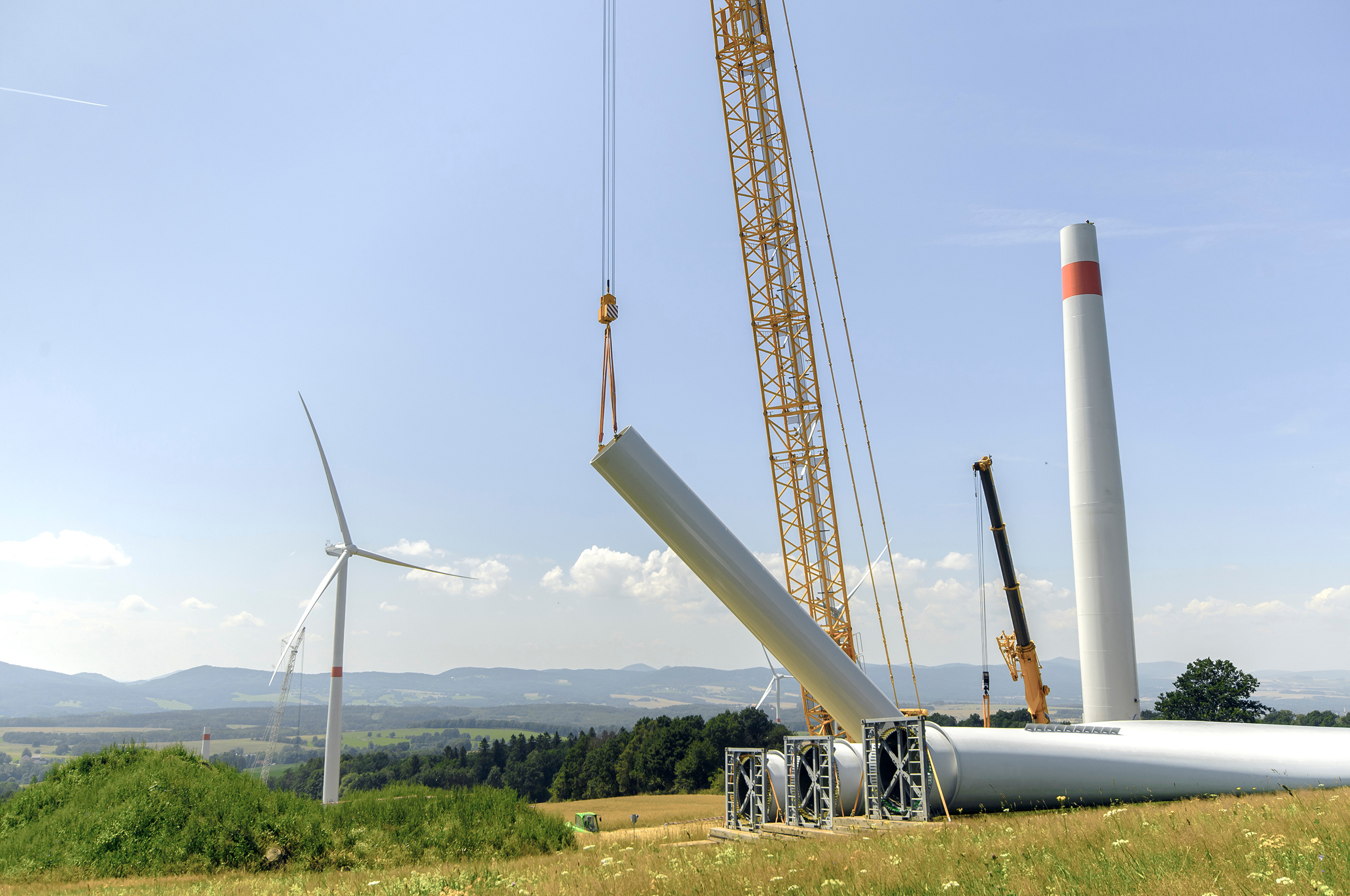
The image is familiar. Massive towers. Heavy steel. Concrete foundations poured deep into the ground. At a glance, the claim feels intuitive. If something looks industrial, it must have significant negative impacts.
But intuition is not the same as analysis.
When conversations about renewable energy stop at construction and without looking beyond it, they miss the most important part of the story. Energy systems do not exist for a moment. They exist for decades. If we want to understand whether wind energy is truly “clean,” we have to look at the full lifecycle of a turbine, from manufacturing and installation through years of operation and eventual decommissioning. When we do, the picture changes quickly.
What seems like a permanent carbon debt turns out to be a very short payback measured in months, not years, followed by decades of clean electricity. The myth persists not because the facts are unclear, but because the math is rarely explained and intentionally obscured by those with conflicting interests.
When people talk about “dirty renewables,” they are usually pointing to something real, even if the conclusion misses the mark. Steel has emissions. Concrete has emissions. Transporting large components has emissions. Maintenance matters. And of course, end of life matters too.
These are valid concerns. And importantly, within the renewable energy community and the science community at large, they are not ignored.
Lifecycle accounting includes all of these stages. Manufacturing, transportation, construction, operation, maintenance, and decommissioning are not hand waved away. They are measured, modeled, and compared. The problem is not that these impacts are overlooked. It’s that they are often treated as the whole story, a deliberate framing that creates a distorted picture. It isolates one moment in time and ignores the benefits that follow.
This is a transparently bad faith argument that ignores the purpose of renewable energy projects: to produce low emission electricity.
Lifecycle emissions measure the total environmental impact of an energy system from start to finish. That includes extracting raw materials, manufacturing components, transporting and installing them, operating the system over its lifespan, and eventually decommissioning or recycling it.
This is the standard framework used by engineers, energy planners, and climate scientists because it allows for fair comparisons across technologies. It avoids cherry-picking and it recognizes that energy systems are long-lived assets, not single events.
Judging a wind turbine by its construction alone is like judging a car’s emissions by the factory it was built in, rather than how it’s driven over twenty years. The factory matters. But it accounts for only a small fraction of the vehicle’s lifetime impact.
When lifecycle analysis is applied, one fact stands out.
Modern wind turbines typically offset the emissions associated with their manufacturing, installation, and construction in roughly seven to nine months. After that, they continue producing electricity with near-zero operational emissions.
Over a lifespan of twenty to thirty years, that initial carbon investment is repaid many times over. The net benefit is substantial.
And this is not a best-case scenario. It is what the data has consistently shown across geographies, turbine designs, and grid conditions for over a decade.
If the data is clear, why does the myth endure?
Part of the answer is visibility. Construction is obvious. You can see it. Fossil fuel emissions, by contrast, are ongoing but largely invisible. They leave smokestacks and tailpipes, disperse into the atmosphere, and disappear from view, even though their effects accumulate every hour of every day.
Another factor is simplicity. Sound bites travel faster than lifecycle math. A striking visual or a dramatic line from a movie or viral clip is easier to repeat than a chart showing emissions over twenty or thirty years.
But repetition alone does not explain the staying power of this claim.
The reality is that this myth has been actively reinforced by an industry with a direct financial interest in delaying the energy transition. Fossil fuel companies benefit when renewable energy is framed as unreliable, inefficient, or environmentally suspect. Selective framing and misleading comparisons are not accidental misunderstandings. They are a communications strategy.
When a debunked claim continues to circulate long after the evidence has settled the question, it stops being an honest mistake. It becomes disinformation. And when that disinformation is promoted by incumbents whose dominance depends on preserving the status quo, it reflects a cynical bad faith effort to protect market power, not a serious debate about energy systems.
That context explains the persistence of this and other clean energy myths. It’s not about confusion. It’s about control.
It’s important to be clear about something else. No energy source is impact-free.
Wind, solar, hydro, nuclear, oil, gas, coal. Every system has trade-offs. Credibility comes from acknowledging that reality, not pretending otherwise.
Carbon emissions are a useful metric, but they don’t capture the full range of impacts associated with fossil fuels. Air pollution, cancer risk, oil spills, land degradation, and water contamination
often sit outside standard carbon accounting. These harms are real, and they persist alongside emissions.
Lifecycle analysis helps put these differences into context. According to the National Renewable Energy Laboratory, fossil fuel electricity emits the majority of its greenhouse gases during ongoing operation. Wind, solar, and nuclear concentrate most of their emissions upfront, before electricity is ever generated.
Duration is the key here. Fossil fuel systems emit carbon every day they operate. Renewables incur a finite carbon cost and then largely stop emitting.
There is also uncertainty on the fossil fuel side that is often underestimated. Methane leakage significantly worsens real-world emissions from oil and gas. Research from St. Francis Xavier University and its methane measurement group FluxLab shows that compliance gaps and underreporting are common. Because methane is far more potent than carbon dioxide in the near term, these upstream leaks materially change the climate math.
So the right question is not whether an energy source has an impact. It’s what kind of impact it has, where it occurs, and for how long.
For Nova Scotia, this distinction is especially important.
The province’s wind resource is abundant and proven. Clean generation feeds directly into the existing grid. Once built, the lifecycle benefits compound year after year, reducing exposure to fuel price volatility and lowering long-term emissions.
Energy choice is about long-term systems. Decisions made today shape the grid we will rely on for decades. Making the right decision often means being about to spot disinformation and misinformation when you see it.
There are a few simple questions that can help sort fact from fiction.
Be wary of claims that stop at construction. Ask about lifecycle, time horizon, and scale. Ask what happens over twenty or thirty years, not just in the first year.
Facts don’t need volume to be true. They need context.
When it comes to energy, the full story matters. And it is almost always longer than a simple sound bite.
Dan Roscoe is the President of Renewall Energy, a renewable energy provider, and CEO of Roswall Development, a renewable energy developer, both based in Halifax, Nova Scotia. His work is focused on building the infrastructure for a cleaner, smarter energy future across Canada and beyond.


